Cryptocurrency
New Crypto ETFs Launch Despite U.S. Government Shutdown – A Deep Dive Into The Expanding Digital Asset Market
Introduction
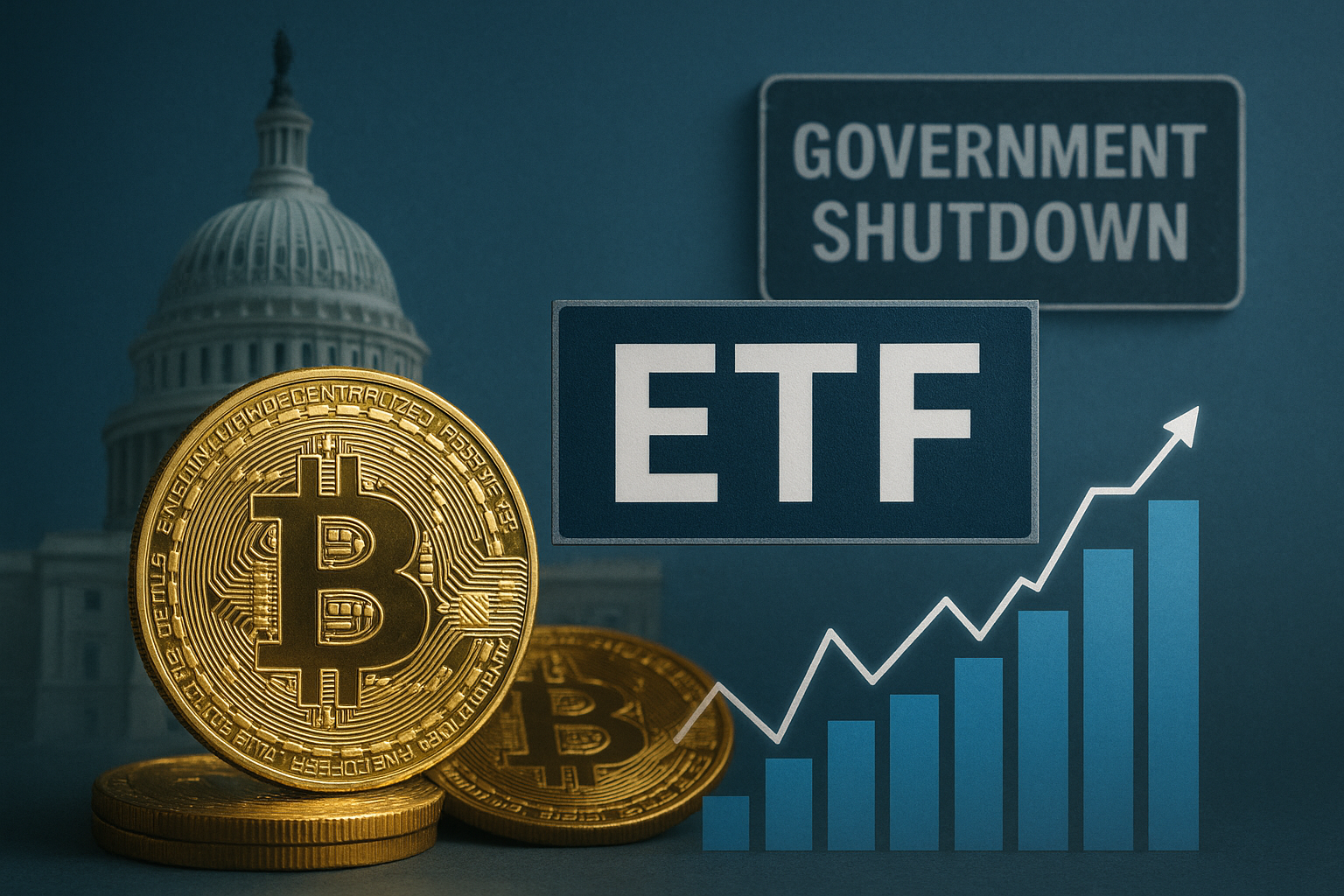
In late October 2025, the financial world witnessed an unexpected development as a wave of new cryptocurrency-focused exchange-traded funds (ETFs) launched in the United States—despite the Securities and Exchange Commission (SEC) being partially shut down due to a government funding lapse. This event not only highlighted the growing demand for crypto-based investment products but also revealed the evolving dynamics of regulatory frameworks in digital finance.
Several asset managers took advantage of procedural mechanisms to launch funds tied to cryptocurrencies such as Solana, Litecoin, and Hedera. Among the most notable releases was the Bitwise Solana Staking ETF (BSOL), a fund offering full exposure to Solana (SOL) and its staking rewards. Other issuers followed suit with funds tracking alternative digital assets, broadening the market beyond traditional Bitcoin and Ethereum products.
Regulatory Context – The Shutdown And Its Implications
The Government Shutdown
In early October 2025, the United States entered a partial government shutdown following a budget impasse in Congress. This event temporarily restricted operations across several federal agencies, including the SEC. The shutdown significantly limited the agency’s ability to review new filings, approve financial products, or engage in active oversight. Normally, the SEC would review, comment on, and explicitly approve ETF filings before they became effective. However, with staff working under essential-only conditions, many routine approvals were delayed or frozen.
SEC’s Updated Listing Standards
Prior to the shutdown, the SEC had already approved new generic listing standards for commodity-based exchange-traded products. These standards simplified the process for asset managers to list certain ETFs tied to commodities or digital assets, provided they met specific liquidity, custody, and transparency requirements. This shift allowed exchanges such as Nasdaq and the New York Stock Exchange to fast-track certain ETF applications without needing case-by-case approval.
The timing of this regulatory update proved crucial. Because it allowed ETFs that fit pre-approved standards to move forward automatically after a set period, issuers found a way to legally launch their products even when the SEC was not fully operational.
How ETF Issuers Bypassed the Shutdown?
Normally, ETF issuers include a “delaying amendment” in their registration statements, giving the SEC time to review and approve before effectiveness. However, several issuers intentionally omitted this clause. Under Section 8(a) of the Securities Act of 1933, a registration statement without a delaying amendment automatically becomes effective 20 days after filing—unless the SEC actively intervenes. Because the agency was largely inactive during the shutdown, it could not issue delays, allowing the filings to become effective by default.
This procedural nuance enabled firms such as Bitwise and smaller managers like Canary Capital to legally launch their funds despite the administrative paralysis. It demonstrated how issuers could use existing regulations to move forward without explicit approval, a situation that raised both admiration and concern among market observers.
The New ETF Products
Bitwise Solana Staking ETF (BSOL)
Among the most prominent new offerings was the Bitwise Solana Staking ETF. This fund provides investors with exposure to Solana’s price movements while also incorporating staking rewards generated by participating in the Solana blockchain’s consensus mechanism. The staking yield for Solana was approximately 7 percent at launch, adding an income component to the fund that distinguishes it from traditional spot ETFs.
This product represented a significant step forward in ETF design. Until this point, most U.S. crypto ETFs focused exclusively on price tracking and excluded staking rewards due to regulatory ambiguity. The BSOL fund effectively bridged that gap, signaling that mainstream financial structures could integrate blockchain-based income models.
Litecoin and Hedera ETFs
Canary Capital launched two additional ETFs—one tracking Litecoin (LTC) and another following Hedera (HBAR). These funds expanded the ETF universe beyond the dominant Bitcoin and Ethereum products, allowing investors to gain exposure to mid-cap digital assets within a regulated framework. Such diversification marked an important moment in crypto finance, showing that investor demand extended to other networks with distinct technological and economic propositions.
Grayscale’s Solana ETF Conversion
Another major development came from Grayscale Investments, which announced the conversion of its Solana Trust into an ETF listed on the New York Stock Exchange. This move illustrated how established crypto asset managers are adapting to the evolving regulatory landscape and using the ETF structure to attract institutional and retail investors.
Significance of These Launches
These new products represent several milestones for the crypto ETF sector:
Expansion beyond Bitcoin and Ethereum: Investors now have regulated access to smaller-cap digital assets.
Integration of staking yield: The inclusion of staking income introduces a new return dimension for crypto ETFs.
Regulatory innovation: Asset managers demonstrated creative use of existing rules to advance during a government shutdown.
Growing institutional engagement: The participation of recognized asset managers signals continued mainstream acceptance of crypto assets.
Market Implications
Broader Institutional Adoption
The successful launch of altcoin ETFs demonstrates increasing institutional comfort with digital assets. Institutional investors, who often face restrictions on direct crypto purchases, can now access Solana, Litecoin, and Hedera through familiar investment vehicles. This could lead to greater inflows, improved liquidity, and higher legitimacy for these networks.
Competitive Landscape Among Issuers
Competition among ETF providers is intensifying. Asset managers are racing to establish first-mover advantages—whether through the first staking-enabled fund, the first mid-cap asset ETF, or the lowest fee structure. This competition may benefit investors through reduced costs and innovation but could also lead to saturation if demand fails to meet the growing supply of crypto products.
Impact on Token Prices
ETF listings can influence the prices of their underlying assets by creating new demand from institutional channels. Solana, Litecoin, and Hedera could experience upward momentum if funds attract substantial assets under management. However, price effects depend on sustained investor interest, broader market sentiment, and macroeconomic conditions affecting risk appetite.
Regulatory Risk
While the automatic activation of filings was technically legal, it also raised concerns about oversight. Critics argue that the absence of active SEC review could increase the risk of product flaws or insufficient disclosures. The SEC may revisit these filings once the government reopens, potentially leading to retroactive scrutiny, amendments, or new guidance on future crypto ETF submissions.
Broader Ecosystem Effects
The October 2025 ETF wave could pave the way for new categories of funds, including multi-crypto baskets, thematic funds, and yield-enhanced portfolios. However, it also introduces operational complexity, particularly regarding custody, staking security, and valuation practices. The market will need time to evaluate whether these funds deliver consistent returns and transparency.
Risks And Investor Considerations
Token and Network Risk
Each crypto asset carries its own risks. Solana has faced network outages in the past; Hedera’s governance structure is distinct but still maturing; and Litecoin remains subject to declining block rewards. Investors must understand that holding ETFs does not eliminate the underlying asset’s volatility or operational uncertainties.
Execution and Custody Risk
Staking-enabled ETFs introduce operational risks. The process of staking involves locking up tokens to validate transactions, and poor validator performance can lead to penalties or reduced rewards. Custody solutions for staking assets also require sophisticated security infrastructure, increasing complexity and potential vulnerability.
Market Liquidity and Volatility
Altcoins typically have lower liquidity compared to Bitcoin and Ethereum, leading to higher volatility. ETFs tracking such assets may experience greater price fluctuations, wider bid-ask spreads, and tracking errors, particularly during market stress or rapid shifts in sentiment.
Regulatory Uncertainty
The regulatory outlook for crypto ETFs remains uncertain. Once normal government operations resume, the SEC may impose new restrictions, demand additional disclosures, or challenge the appropriateness of staking within ETF structures. International coordination among regulators may also affect how these products evolve.
What To Watch In The Coming Months?
Additional Filings and Launches: More asset managers are expected to file for ETFs tracking tokens such as XRP, Cardano, and Avalanche. The speed of these launches will test whether the regulatory environment can sustain further expansion.
Resumption of SEC Operations: Once the SEC is fully operational, it may reassess the ETFs launched during the shutdown, potentially revising or updating the regulatory framework.
Market Performance: The initial asset flows and trading volume will indicate investor appetite for altcoin ETFs. High demand could encourage further innovation.
Global Influence: The U.S. developments could influence other jurisdictions to adopt or revise their crypto ETF frameworks, especially in Europe and Asia, where crypto regulation is evolving rapidly.
Technological and Economic Factors: Network upgrades, protocol changes, and macroeconomic conditions—such as interest rates and inflation expectations—will continue to shape crypto asset valuations and ETF performance.
Conclusion
The launch of several new crypto ETFs during the October 2025 U.S. government shutdown marks a pivotal moment in the evolution of digital asset investing. Through procedural ingenuity and regulatory foresight, asset managers expanded the ETF landscape to include Solana, Litecoin, and Hedera—offering exposure to both price movements and staking yields. This achievement underscores the increasing integration of blockchain technology into traditional financial markets.
However, these developments also highlight important challenges. Regulatory ambiguity, staking complexities, and token volatility present real risks. Investors must balance the appeal of innovative financial products with a clear understanding of the underlying assets and their market dynamics.