NFT & Blockchain
Blue Chip NFTs Driving The Market In 2026
Introduction
The global NFT market has entered a new and more complex phase in 2026, one that is defined less by explosive growth and more by selective strength. While overall participation has declined and trading volumes have fluctuated, a handful of elite collections continue to command attention, capital, and cultural relevance. This shift has given rise to what analysts describe as a top heavy market structure, where value is concentrated among a small group of high profile assets while the majority of projects struggle to maintain traction.
This emerging dynamic reflects a maturing digital asset ecosystem that is increasingly driven by brand power, community strength, and perceived long term value rather than speculative hype alone. Understanding how and why blue chip NFTs are driving the market requires a deeper examination of investor behavior, market structure, and the evolving role of NFTs in the wider digital economy.
The Rise Of Blue Chip NFTs
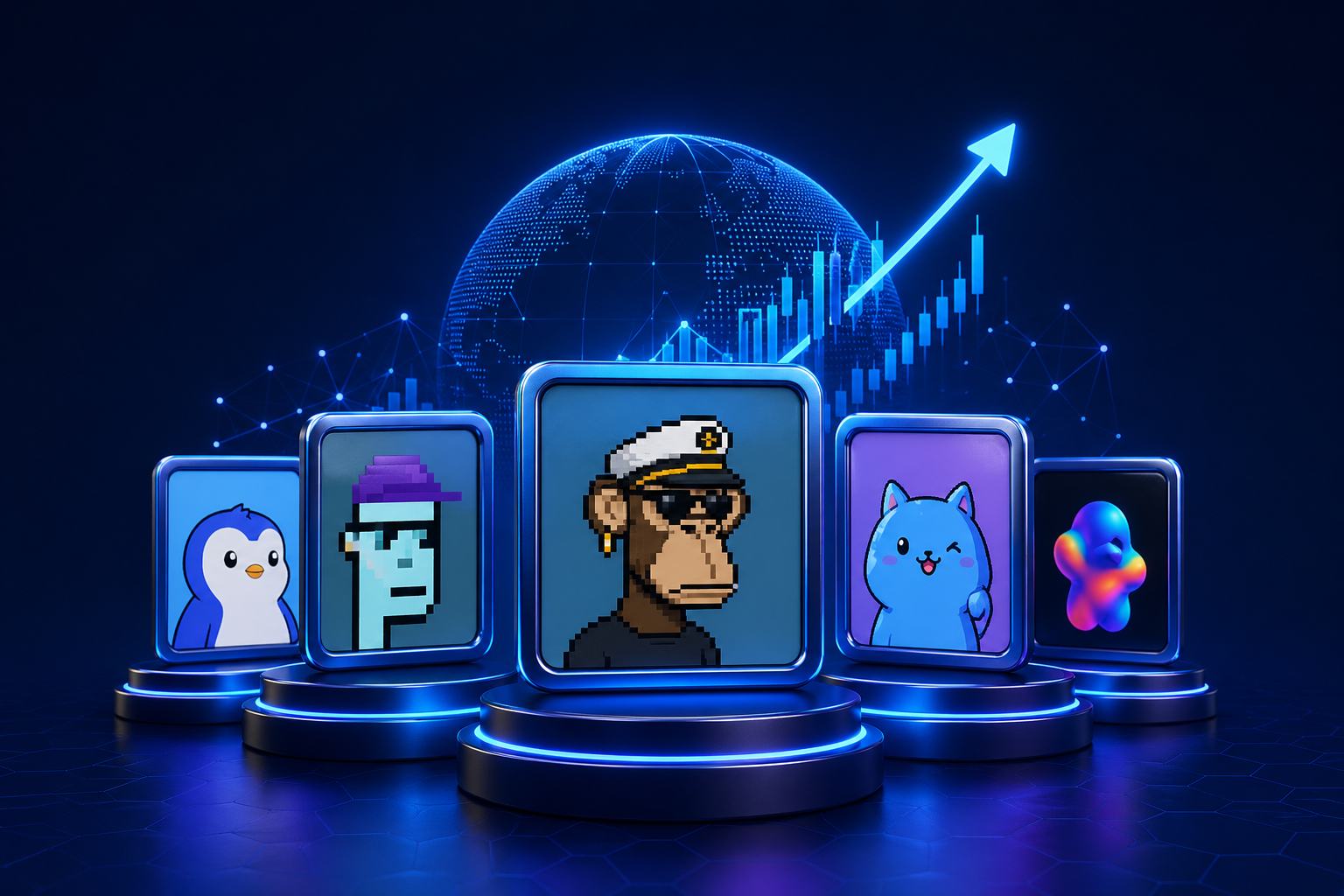
Blue chip NFTs are typically defined as collections that have achieved a high level of recognition, consistent demand, and cultural significance within the blockchain space. Much like blue chip stocks in traditional finance, these assets are considered relatively stable and reliable compared to the broader and more volatile NFT landscape. Collections like Pudgy Penguins and Bored Ape Yacht Club have built strong brand identities, loyal communities, and extensive ecosystems that extend beyond simple digital ownership.
In March 2026, these collections experienced notable price rallies even as the number of active NFT traders declined. This divergence between price performance and user participation highlights a key shift in market dynamics. Rather than being driven by mass adoption or retail speculation, the NFT market is increasingly influenced by high net worth individuals, institutional interest, and long term holders who prioritize quality over quantity.
The success of these blue chip collections is not accidental. It is the result of sustained development efforts, strategic partnerships, and the ability to remain culturally relevant in a rapidly evolving digital environment. For example, Pudgy Penguins has expanded into physical merchandise and mainstream branding, while Bored Ape Yacht Club continues to leverage its status as a cultural icon within Web3 communities.
A Decline In Participation But Not In Value
One of the most striking trends in early 2026 is the decline in overall NFT participation. Fewer users are actively buying, selling, or minting NFTs compared to the peak years of the market. This decline can be attributed to several factors, including market fatigue, regulatory uncertainty, and the broader slowdown in the cryptocurrency sector.
However, this reduction in activity has not led to a uniform decrease in value across all NFTs. Instead, it has created a divergence where top tier assets continue to appreciate or hold their value while lower tier projects experience significant declines. This phenomenon underscores the importance of perceived quality and trust in a market that is becoming increasingly selective.
Investors are no longer willing to allocate capital indiscriminately. They are focusing on projects with proven track records, strong communities, and clear utility. As a result, blue chip NFTs are benefiting from a flight to safety, similar to how investors in traditional markets gravitate toward established companies during periods of uncertainty.
Understanding The Top Heavy Market Structure
The concept of a top heavy market refers to a situation where a disproportionate share of value is concentrated in a small number of assets. In the NFT space, this means that a handful of collections account for a large percentage of total market capitalization and trading volume.
This structure has several implications. First, it creates a barrier to entry for new projects, as they must compete with well established brands that already dominate attention and resources. Second, it increases the importance of reputation and trust, as investors become more cautious about where they allocate their funds. Third, it can lead to reduced innovation, as capital flows toward existing leaders rather than experimental or emerging ideas.
At the same time, a top heavy market is not necessarily a negative development. It can be seen as a sign of maturation, where the market is moving beyond speculative excess and toward a more sustainable model based on quality and long term value. In this context, blue chip NFTs serve as anchors that provide stability and confidence to the broader ecosystem.
The Role Of Community And Brand
One of the defining characteristics of successful blue chip NFTs is the strength of their communities. Unlike traditional assets, NFTs derive a significant portion of their value from social dynamics, cultural relevance, and collective identity. Owners of these assets are not just investors but also participants in a shared narrative.
Communities around collections like Pudgy Penguins and Bored Ape Yacht Club are highly engaged and often contribute to the growth and visibility of the brand. This engagement creates a network effect, where the value of the asset increases as more people become involved and invested in its success.
Brand or brand power, plays a crucial role in this process. Blue chip NFTs have successfully positioned themselves as recognizable and desirable digital identities. They are used as profile pictures, status symbols, and access passes to exclusive experiences. This multifaceted utility enhances their appeal and helps sustain demand even in a challenging market environment.
Institutional Interest And Market Stability
Another factor contributing to the resilience of blue chip NFTs is the growing interest from institutional investors and high net worth individuals. As the NFT market matures, it is attracting participants who bring larger amounts of capital and a longer investment horizon.
These investors are more likely to focus on established collections with a proven history of performance and credibility. Their involvement adds liquidity and stability to the market, further reinforcing the dominance of blue chip assets. It also signals a shift in perception, as NFTs are increasingly viewed as legitimate investment vehicles rather than speculative novelties.
This institutional interest is closely linked to the broader integration of blockchain technology into mainstream finance and commerce. As digital ownership becomes more widely accepted, blue chip NFTs are well positioned to benefit from increased adoption and recognition.
Challenges For Emerging NFT Projects
While blue chip NFTs are thriving, the same cannot be said for many newer or lesser known projects. The top heavy nature of the market makes it difficult for these projects to gain visibility and attract investment. Without a strong brand, community, or unique value proposition, they are often overshadowed by established leaders.
This environment has led to a wave of consolidation, where weaker projects either shut down or are absorbed into larger ecosystems. It has also forced creators to rethink their strategies, focusing more on utility, storytelling, and long term engagement rather than short term hype.
For the NFT ecosystem as a whole, this presents both a challenge and an opportunity. While it may limit the diversity of successful projects in the short term, it also encourages higher standards and more meaningful innovation.
The Shift From Speculation To Utility
The dominance of blue chip NFTs is closely tied to a broader shift in the market from speculation to utility. In the early days of NFTs, value was often driven by hype and the expectation of quick profits. Today, there is a growing emphasis on real world applications and tangible benefits.
Blue chip collections are leading this transition by offering a range of utilities, including access to exclusive events, intellectual property rights, and integration with physical products. This added functionality enhances their value proposition and makes them more appealing to a wider audience.
As the market continues to evolve, utility is likely to become an increasingly important factor in determining the success of NFT projects. Those that can deliver meaningful experiences and solve real problems will be better positioned to compete in a more selective and mature environment.
Cultural Impact And Long Term Outlook
Beyond their financial performance, blue chip NFTs have had a significant cultural impact. They have influenced digital art, online identity, and the way people interact with technology. Collections like Bored Ape Yacht Club have become symbols of status and belonging, while Pudgy Penguins has cultivated a more inclusive and playful brand image.
Looking ahead, the role of blue chip NFTs is likely to expand as the boundaries between digital and physical worlds continue to blur. They may serve as foundational elements in virtual environments, gaming ecosystems, and decentralized social networks.
However, the sustainability of this top heavy market structure will depend on several factors, including regulatory developments, technological advancements, and the ability of the industry to attract new participants. While blue chip NFTs are currently driving the market, their long term success will require continuous innovation and adaptation.
Conclusion
The NFT market in 2026 is defined by a clear and powerful trend the rise of blue chip dominance in a top heavy ecosystem. Collections like Pudgy Penguins and Bored Ape Yacht Club have demonstrated that strong brands, engaged communities, and real utility can sustain value even in a declining market.
This shift represents a move toward maturity, where quality and credibility take precedence over speculation and hype. While it presents challenges for emerging projects, it also lays the foundation for a more stable and sustainable digital asset economy.
As the market continues to evolve, the influence of blue chip NFTs will remain a key factor shaping its direction. Whether this concentration of value leads to greater innovation or increased consolidation will depend on how the industry balances growth with inclusivity in the years to come.