NFT & Blockchain
NFT Market Revival Driven By Blockchain Gaming Boom
Introduction
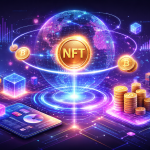
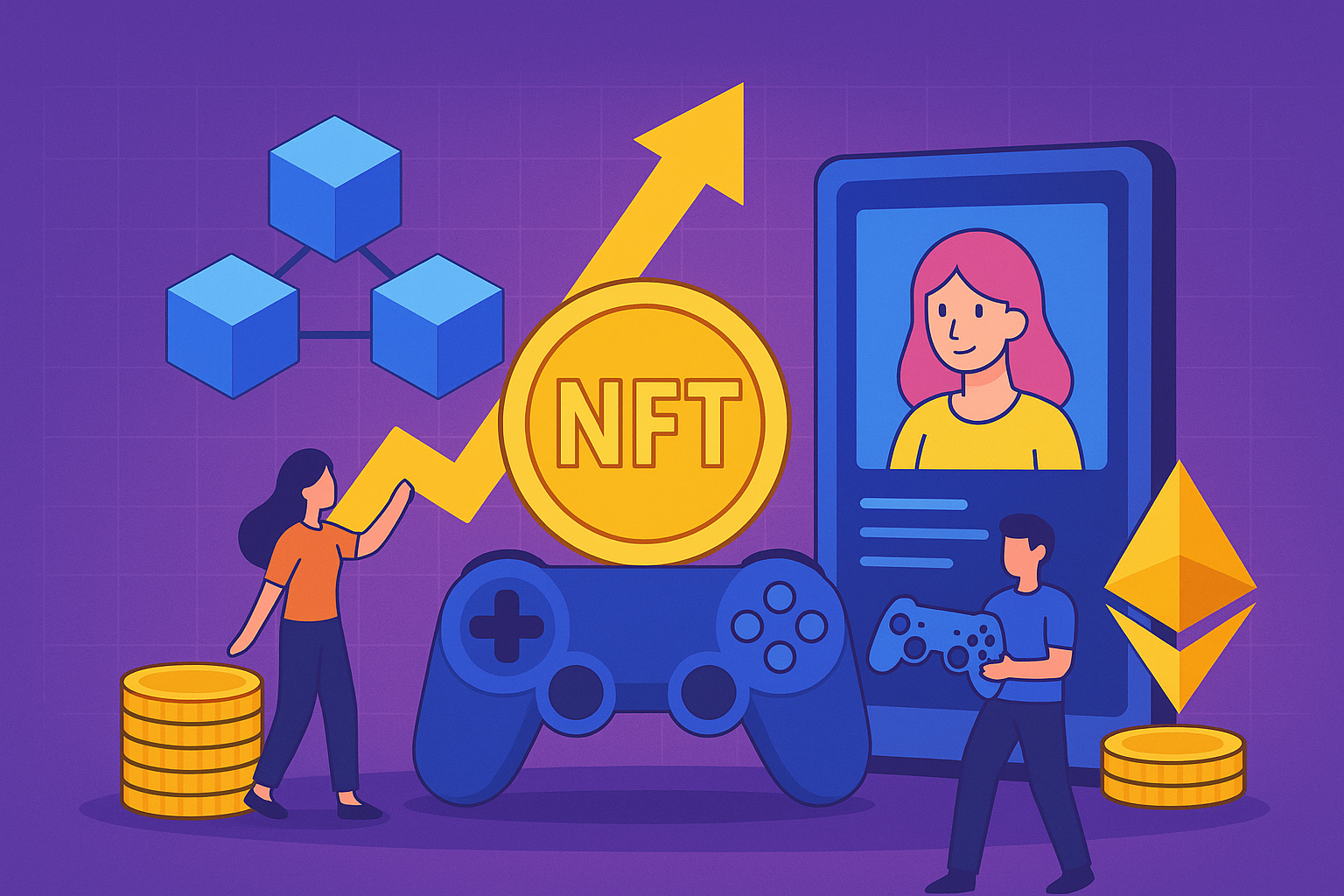
The non-fungible token (NFT) market, once a shining star of the cryptocurrency industry, experienced a prolonged slowdown following the speculative frenzy of 2021 and early 2022. Declining sales volumes, reduced investor interest, and shifting priorities toward decentralized finance (DeFi) and blockchain infrastructure projects left the NFT space struggling to find its footing. Yet in 2025, a surprising catalyst has emerged to reverse this downtrend — blockchain gaming. Over the past year, gaming-driven NFT sales have surged, reviving trading activity, attracting new participants, and reshaping the industry’s growth trajectory.
From Market Lull To Momentum
By late 2023, the NFT market had entered a period of stagnation. The combination of rising transaction fees, an oversaturation of low-quality collections, and declining resale values had discouraged many investors and collectors. Speculation-driven flipping gave way to a smaller, niche group of enthusiasts holding onto high-value assets.
However, starting in early 2025, data from major NFT marketplaces revealed a sharp uptick in sales volume. According to aggregated figures from industry analytics platforms, NFT trading volume grew by more than 40% in Q2 2025 compared to the previous quarter. The driving force? A wave of blockchain gaming titles that integrated NFTs as essential in-game assets, offering both utility and entertainment value.
Why Blockchain Gaming Works For NFTs?
Blockchain gaming represents a unique intersection of entertainment, digital asset ownership, and decentralized technology. Unlike speculative NFT collections that rely heavily on rarity and hype, gaming NFTs are tied to tangible use cases. Players can purchase, trade, and upgrade in-game items — such as characters, skins, weapons, or land plots — all represented as NFTs on blockchain networks.
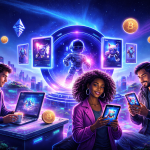
The appeal lies in player ownership. In traditional gaming, all in-game assets are controlled by the publisher, and players have no rights to sell or transfer them. Blockchain gaming changes this dynamic, allowing gamers to truly own their digital items, resell them in secondary markets, and potentially profit from their participation in the game. This shift has driven a massive influx of active users into the NFT market, many of whom are gamers rather than crypto-native investors.
Major Gaming Projects Fueling The NFT Comeback
Several high-profile blockchain gaming projects have been at the forefront of this resurgence:
GuildVerse Online — A fantasy MMORPG that uses NFTs to represent characters, weapons, and guild memberships. The game’s seasonal tournaments offer rare NFT rewards that can be traded or staked for passive income.
MetaRacers X — A futuristic racing game where players customize and trade NFT-based vehicles. Each car’s performance can be upgraded via blockchain-recorded parts, creating a vibrant trading economy.
PixelPioneers — A retro-inspired adventure game where every playable world and character is an NFT, giving rise to a community-driven expansion model.
Arena of Chains — A competitive battle arena where NFT warriors can be leased to other players for tournaments, generating ongoing revenue streams for owners.
These titles have not only attracted large player bases but have also fostered thriving secondary marketplaces where NFTs change hands frequently, driving transaction volumes.
Layer-2 Solutions And Cheaper Minting
One of the biggest barriers to NFT adoption has been high transaction fees on major blockchains, particularly Ethereum during periods of network congestion. The resurgence in gaming NFTs has coincided with rapid adoption of layer-2 scaling solutions such as Polygon, Immutable X, and Arbitrum. These platforms allow near-instant, low-cost NFT transactions, making it feasible for gamers to trade frequently without prohibitive fees.
This technical evolution has been critical in sustaining the NFT revival. Developers can now mint and distribute in-game NFTs to large player bases without worrying about excessive costs, and players are more inclined to trade items when transaction fees are minimal.
The New NFT Economy: Play-To-Own Vs. Play-To-Earn
The early hype cycle around blockchain gaming was driven largely by play-to-earn models, where players generated income by participating in games. However, this model proved unsustainable in many cases, as economic rewards relied on continuous inflows of new participants.
In 2025, the trend has shifted toward play-to-own, which emphasizes digital ownership and long-term engagement rather than purely financial incentives. Players purchase NFTs for their gameplay value, community status, or collectible appeal, and the ability to trade them later is seen as a bonus rather than the sole purpose. This subtle shift in mindset has created a more stable market environment where NFT values are tied to game ecosystems rather than speculative hype cycles.
Institutional And Brand Participation
The resurgence of NFT sales in gaming has not gone unnoticed by major brands and investors. Several global companies have launched NFT collaborations with blockchain gaming studios, integrating branded items into games as limited-edition collectibles. For example, luxury fashion houses have designed exclusive NFT skins for popular gaming titles, while entertainment companies have released character crossovers.
Venture capital interest in blockchain gaming has also increased, with funding rounds in 2025 reaching record highs. Investors are betting that gaming will be the sector that finally brings NFTs into the mainstream in a sustainable way.
The Role Of Community And Social Engagement
One of the strongest drivers of NFT adoption in gaming is community interaction. Many blockchain games operate as decentralized autonomous organizations (DAOs), where players vote on game updates, new content releases, and in-game economy adjustments. This participatory model builds player loyalty and keeps communities engaged far beyond typical gaming lifespans.
Gamers are also leveraging social media and streaming platforms to showcase their NFT collections, driving word-of-mouth marketing and bringing new players into the fold. The combination of competitive gameplay, collectible ownership, and social prestige has proven to be a potent formula for market growth.
Risks And Challenges Ahead
Despite the positive momentum, the NFT gaming sector still faces significant challenges. Regulatory uncertainty, especially around the classification of NFTs as financial assets, could impact how games operate in different jurisdictions. Additionally, maintaining a sustainable in-game economy remains a delicate balancing act — too much scarcity can limit accessibility, while oversupply can dilute value.
Security is another concern. With NFT assets carrying real-world value, hackers and scammers have targeted gaming platforms through phishing attacks and smart contract exploits. Strengthening security measures and educating players on safe practices will be essential for long-term growth.
Future Outlook For The NFT Market
If current trends continue, the NFT market in 2025 could be entering its second golden age, this time fueled by genuine utility and sustainable ecosystems rather than speculative mania. Industry analysts predict that blockchain gaming could account for over 50% of NFT transaction volume by the end of 2026, cementing its role as the sector’s primary growth driver.
Advancements in interoperability — the ability for NFTs to function across multiple games and platforms — could further expand the market’s potential. Imagine purchasing an NFT weapon in one game and being able to use it in several others, or transferring a character’s identity seamlessly across different virtual worlds. Such developments could turn NFTs into the backbone of a decentralized gaming metaverse.
Conclusion
The revival of the NFT market in 2025 is not a mere repeat of past hype cycles. It is being shaped by an industry segment that offers tangible benefits to users, sustainable business models for developers, and scalable technology for mass adoption. Blockchain gaming has proven that NFTs can be more than speculative assets — they can be functional, immersive, and community-driven tools that redefine digital ownership. As the sector matures, the lessons learned from earlier market downturns are guiding its evolution toward a more resilient and valuable future.