NFT & Blockchain
London Stock Exchange Group Completes First Blockchain Powered Fundraising
Introduction
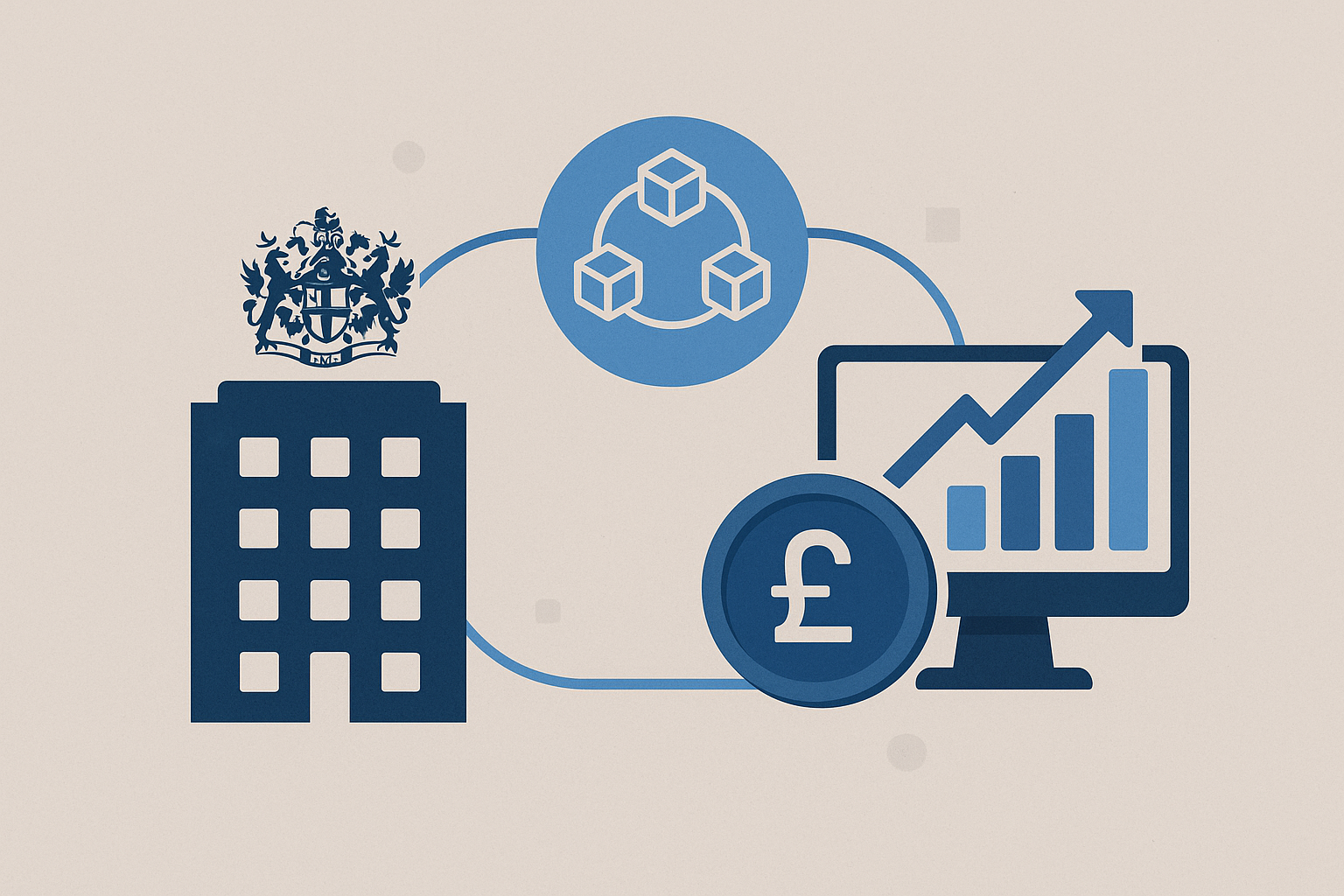
The global financial industry is entering a historic new chapter as the London Stock Exchange Group (LSEG) announced the completion of its first fundraising using blockchain technology. The move, carried out through its newly developed Digital Markets Infrastructure platform, represents a major milestone not only for LSEG but also for the future of capital markets. This initiative is not just about adopting a new technology but about redefining the very mechanics of how funds are raised, settled, and distributed in a secure, transparent, and efficient manner. By successfully implementing blockchain in a live fundraising exercise, LSEG signals a future where traditional capital market processes may be completely reimagined.
The Evolution Of Fundraising In Global Markets
Fundraising has always been the backbone of capital markets. From public listings to private placements, the process traditionally involves multiple intermediaries, long settlement cycles, and significant administrative costs. Over the decades, technological upgrades such as electronic trading and algorithmic execution improved efficiency, but the core structure of issuance and settlement remained fundamentally unchanged. The arrival of blockchain technology has provided an opportunity to rethink these systems from the ground up.
Blockchain enables a single source of truth for recording ownership and transactions. Unlike conventional ledgers, which are siloed across institutions, a blockchain network ensures transparency, instant verification, and the elimination of duplicate records. In the context of fundraising, this means faster settlement, reduced counterparty risk, and lower operational expenses. For investors, blockchain creates the possibility of greater accessibility to asset classes, especially those previously considered complex or illiquid.
LSEG’s Digital Markets Infrastructure Platform
The centerpiece of this milestone is the Digital Markets Infrastructure (DMI) platform developed by LSEG. The platform was designed with the vision of integrating blockchain into every stage of the financial lifecycle, from issuance to secondary market trading and settlement. The DMI platform ensures that each transaction is immutably recorded on a distributed ledger, giving all stakeholders real time visibility into ownership and movement of assets.
Initially, the platform is being applied to private funds, an asset class often characterized by limited transparency and complex settlement processes. Private funds typically rely on extensive legal documentation and manual reconciliations, which slow down capital flows. By digitizing issuance and enabling smart contract driven settlement, DMI simplifies participation for investors while providing fund managers with faster access to capital. LSEG has also emphasized that this is only the beginning, with plans to extend the platform to other asset classes including debt instruments, equities, and structured products.
The First Blockchain Powered Fundraising
In its debut, the Digital Markets Infrastructure successfully managed a fundraising exercise for private funds, demonstrating how blockchain can streamline capital formation. The process, which traditionally would involve multiple days of reconciliation and clearance, was reduced to near real time settlement. This achievement illustrates how blockchain can eliminate inefficiencies that have long burdened global finance.
What made this exercise remarkable was not only the use of blockchain but also the integration of compliance, settlement, and investor engagement into a single digital environment. Every stage of the process, from subscription to allocation to final settlement, was executed on chain. Investors could see their holdings instantly updated, fund managers received immediate confirmation of capital inflows, and regulators had visibility into a fully auditable digital record. This represents a shift in how trust is established in financial transactions, replacing traditional paper trails with blockchain validation.
Why Start With Private Funds?
LSEG’s decision to begin with private funds was strategic. Private markets are among the fastest growing areas of finance, with global private equity and venture capital attracting trillions of dollars annually. However, they are also some of the least efficient, plagued by manual processes and opaque record keeping.
By targeting this segment first, LSEG has addressed an immediate pain point for institutional investors. Faster settlement means that capital can be deployed more effectively, while increased transparency reduces the operational risk of disputes or errors. For fund managers, a blockchain based system lowers administrative costs and enhances investor confidence. Over time, the same model can be expanded to broader capital markets, potentially transforming how securities are issued and traded globally.
How Blockchain Redefines Settlement?
Settlement has historically been one of the most time consuming parts of capital markets. Traditional systems rely on a network of custodians, clearinghouses, and intermediaries to ensure that securities and payments are exchanged accurately. This process often takes two to three days, during which counterparty risk persists.
Blockchain technology collapses this timeline to near instant settlement. By recording both the asset and the cash leg of a transaction on a distributed ledger, delivery versus payment can be achieved automatically and securely. The result is not just speed but also reduced systemic risk. For regulators, blockchain based settlement provides a transparent and auditable system that can enhance oversight without adding complexity.
Implications For Global Capital Markets
The successful fundraising using blockchain signals broader implications for global markets. If such platforms are widely adopted, the nature of market infrastructure itself could shift. Stock exchanges, clearinghouses, and custodians may need to redefine their roles as blockchain reduces the need for intermediaries. Instead of reconciling records across multiple ledgers, market participants could rely on a single, secure ledger that all parties trust.
For investors, this could mean lower costs, faster access to assets, and increased opportunities to participate in markets previously restricted to large institutions. For issuers, blockchain reduces the barriers to raising capital, potentially opening fundraising channels to smaller firms and innovative ventures. Governments and regulators also stand to benefit, as blockchain provides real time transparency that enhances market integrity.
Integration With Global Regulatory Frameworks
While technology opens exciting possibilities, regulatory alignment is critical to success. Financial authorities around the world are carefully examining blockchain applications to ensure investor protection, compliance with anti money laundering rules, and systemic stability. The LSEG initiative demonstrates that blockchain can coexist with regulatory oversight.
By designing DMI in consultation with regulators, LSEG has created a model that could become a blueprint for other jurisdictions. The integration of compliance checks directly into the blockchain process reduces the risk of regulatory breaches while ensuring that investor safeguards are not compromised. The next challenge will be achieving cross border regulatory alignment, especially as capital flows are inherently global.
Future Asset Classes On The Horizon
The launch with private funds is just the first step in a broader journey. LSEG has already indicated plans to extend blockchain integration into other asset classes. Corporate bonds, equities, and even structured financial products could eventually be issued and traded through blockchain based platforms.
Debt markets in particular present a compelling opportunity. With trillions of dollars in issuance annually, the inefficiencies of current systems create significant costs for issuers and investors. Blockchain can simplify issuance, enable programmable interest payments through smart contracts, and improve secondary market liquidity. Equities, too, could benefit from faster settlement and reduced administrative overhead.
Over time, tokenized securities may emerge as a dominant form of capital raising, bridging traditional finance with the innovations of digital assets. By leading this transformation, LSEG positions itself at the forefront of a global shift.
The Broader Context Of Blockchain In Finance
LSEG’s milestone comes at a time when blockchain adoption in finance is accelerating worldwide. Central banks are exploring digital currencies, major banks are trialing tokenized deposits, and institutions are building blockchain based settlement networks. The successful use of blockchain by one of the world’s most established exchanges underscores that the technology has moved from experimentation to real world application.
This shift is not limited to fundraising. Blockchain has the potential to reshape areas such as trade finance, derivatives settlement, and cross border payments. Each application brings efficiency gains, enhanced security, and transparency. The cumulative effect could be a financial system that is more inclusive, accessible, and resilient.
Challenges Ahead
Despite the optimism, challenges remain. Technical scalability, interoperability between blockchain networks, and legal recognition of digital records are hurdles that must be addressed. Large scale adoption also requires industry wide collaboration, as isolated platforms risk creating fragmentation rather than efficiency.
Cybersecurity is another area of concern. While blockchain itself is inherently secure, surrounding systems such as digital wallets and user interfaces remain vulnerable. Ensuring robust security measures will be critical to gaining investor trust at scale. Additionally, regulators must strike a balance between fostering innovation and maintaining market stability.
Conclusion
The London Stock Exchange Group’s first blockchain powered fundraising marks a defining moment in financial innovation. By successfully deploying its Digital Markets Infrastructure platform, LSEG has shown that blockchain is not merely a theoretical technology but a practical solution capable of transforming global finance.
This milestone sets the stage for a future where fundraising is faster, settlement is instantaneous, and transparency is embedded into every transaction. While challenges remain, the direction is clear the integration of blockchain into capital markets is no longer a question of if but when. As more asset classes adopt this model, the very structure of global markets may evolve into a system that is more efficient, secure, and inclusive than ever before.