AI
How AI Is Transforming Cryptocurrency Trading: Amid Capital Challenges And Fee Pressures
Introduction
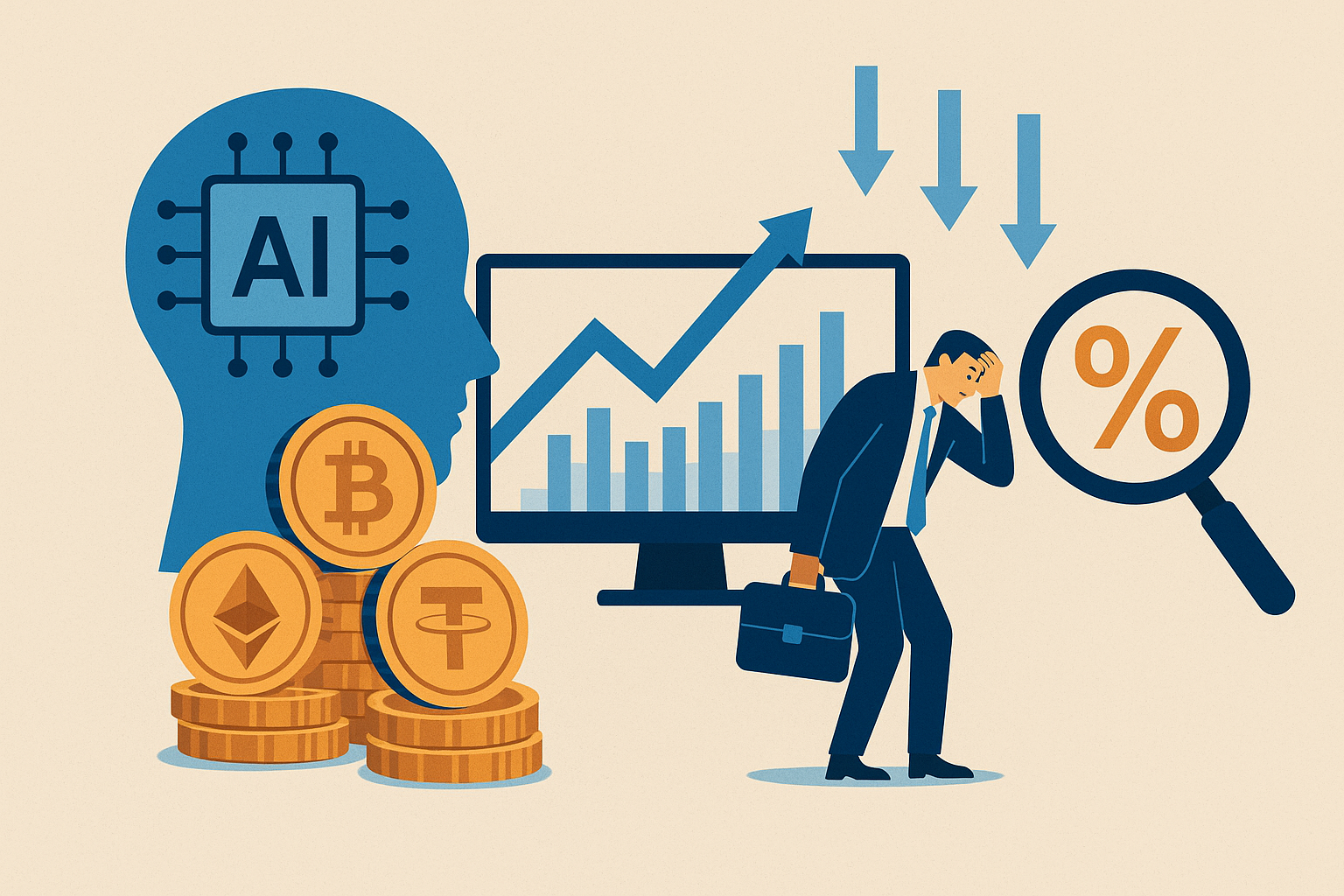
Cryptocurrency trading has long been a space dominated by volatility, rapid innovation, and fierce competition. In 2025, the trading ecosystem is undergoing a radical transformation, not just because of evolving regulations or new blockchain networks, but due to the powerful emergence of artificial intelligence. At the heart of this transformation lies the democratization of trading, where individuals with entry capital as low as $10 are gaining access to sophisticated, AI-powered tools previously reserved for institutional investors.
This shift in the crypto landscape is being driven by a combination of economic challenges and technological advancements. Transaction fees on major exchanges remain a significant concern for small-scale investors. However, AI is proving to be a game-changer, helping these traders navigate the cost-heavy waters of crypto trading with enhanced efficiency and reduced risk. In this article, we take a deep dive into how artificial intelligence is reshaping the crypto market, empowering micro-investors, and helping traders optimize their strategies amidst fee pressure and capital limitations.
The Growing Popularity Of Low-Capital Crypto Trading
The crypto space has seen an influx of new retail investors in recent years, many of whom are entering the market with limited funds. The idea of investing just $10 or $50 in cryptocurrencies is no longer unusual. This democratization of access has allowed people from various economic backgrounds to participate in what was once considered a niche or elite investment sector.
However, these micro-investors face an uphill battle. Unlike larger players who can absorb high gas fees, slippage, and trading commissions, smaller investors often see a significant portion of their capital eaten up by transactional costs. A $10 trade can quickly become a $7 position once exchange fees, network charges, and slippage are factored in. As a result, many of these investors risk becoming unprofitable even when they make the right market calls.
This is where artificial intelligence is stepping in to level the playing field.
Artificial Intelligence: Leveling The Crypto Playing Field
AI’s role in cryptocurrency trading has evolved from basic signal-based alerts to advanced machine learning algorithms capable of predictive analytics, market sentiment interpretation, and automated execution. With the integration of AI, even investors with minimal capital are now gaining access to trading strategies that were once only available to hedge funds and professional quants.
One of the most impactful uses of AI in crypto trading is through the deployment of smart trading bots. These bots analyze vast amounts of market data in real time, adjusting strategies based on fluctuations, order book changes, and even breaking news. For a trader investing $100 or less, this means a vastly improved chance of executing profitable trades, avoiding high-fee periods, and mitigating risks.
Additionally, AI-driven portfolio optimization tools help users determine how to allocate their limited funds across multiple assets, reducing overexposure and increasing diversification — even with amounts as small as $10.
AI Tools Targeting Fee Optimization
Trading fees remain a barrier for smaller investors, especially on decentralized exchanges (DEXs) where gas fees can spike unpredictably. Traditional centralized exchanges also charge commission, and for small trades, these costs can drastically reduce returns. In 2025, a new class of AI-powered tools has emerged to directly address this problem.
These tools calculate optimal trading times, identify exchanges with the lowest transaction costs, and even recommend Layer 2 solutions or alternative blockchains to minimize gas fees. By leveraging real-time fee tracking combined with predictive modeling, these platforms enable users to plan trades during low-cost windows, effectively maximizing the value of each dollar invested.
For example, a micro-trader using a fee-optimization bot might be advised to delay a transaction by 20 minutes in order to reduce Ethereum gas fees by 60 percent. In many cases, this kind of fee sensitivity makes the difference between a profitable trade and a loss.
AI-Enhanced Technical And Sentiment Analysis
While institutional traders have long had access to high-end data platforms and expert analysis, retail users — especially those with limited capital — have largely been left to fend for themselves. That dynamic is changing rapidly due to AI-powered tools designed specifically for non-professional traders.
One of the most popular developments in this area is the rise of AI platforms offering sentiment analysis. These platforms scrape millions of data points from Twitter, Reddit, YouTube, and crypto news websites to provide real-time assessments of public opinion on specific coins or tokens. A small trader planning to invest $50 in a memecoin, for instance, can now access sentiment scores that reflect the overall market mood, potentially preventing ill-timed decisions.
On the technical side, AI models are delivering customized chart analysis, pattern recognition, and momentum indicators that can guide small investors on entry and exit points. These systems often come with educational overlays, making it easier for beginners to understand the basis of each recommendation.
Adaptive AI Bots For Market Volatility
Crypto is well known for its unpredictable price swings, which can scare away new investors or trigger massive losses for the unprepared. Adaptive AI bots, powered by deep learning, are changing how traders — especially those with limited capital — respond to volatility.
Instead of relying on fixed stop-loss orders or emotion-driven exits, AI bots continuously adjust their strategies in real time based on updated volatility profiles. If Bitcoin suddenly drops 8 percent in a two-hour span, for instance, an AI bot might automatically halt all new trades, switch to stablecoins, or short correlated altcoins, depending on the user’s chosen strategy.
This kind of real-time risk management is invaluable for small investors who can’t afford the margin for error that large portfolios can withstand. Even with just $25 in a trading account, AI tools are helping users manage drawdowns, lock in gains, and avoid catastrophic losses.
Education And Strategy Customization Through AI
Another key advantage of modern AI tools is their built-in educational components. Many platforms now provide step-by-step guidance for strategy building, enabling novice traders to create and backtest trading approaches that align with their personal goals, risk tolerance, and available capital.
For example, a user who wants to invest $100 over a three-month period can use AI assistants to simulate potential outcomes based on historical data, market cycles, and macroeconomic trends. These insights can be used to adjust asset allocation, timing, and even risk limits without the need for a formal trading education.
By providing strategy customization that was once the domain of professionals, AI tools are not just enhancing access — they are raising the trading IQ of an entire generation of new crypto participants.
AI In Social And Copy Trading
Social trading platforms have gained momentum as more users look to mimic the strategies of experienced traders. AI is being used to enhance these platforms by curating the most effective strategies based on real performance metrics rather than just popularity.
Some AI tools can now detect manipulation or pump-and-dump schemes and remove such traders from recommended lists, protecting newer users from being misled. Others offer dynamic portfolio cloning, where a user’s portfolio adjusts in real time to match that of a selected expert, filtered by risk level, asset class, or investment duration.
This means someone investing $50 can effectively track the performance of a seasoned trader with a $500,000 portfolio, with AI ensuring proportional and risk-adjusted allocations.
Regulatory Considerations And Ethical Use Of AI
As AI becomes more deeply integrated into the world of cryptocurrency trading, questions surrounding ethics and regulation are becoming increasingly important. Regulators are watching closely to ensure that AI tools do not encourage manipulative practices or promise unrealistic returns.
For traders using limited capital, regulatory clarity is essential. Many of the AI-driven platforms in 2025 now include compliance layers that help users remain within legal trading limits, particularly in jurisdictions with strict guidelines around leverage or derivatives.
Moreover, responsible AI development is a growing focus. Transparency in how algorithms make decisions, along with user control over automated features, is helping create a healthier, more informed retail trading environment.
The Future Outlook: AI As A Gateway To Financial Inclusion
As AI tools become more refined, accessible, and regulated, they are likely to become the gateway through which billions of people worldwide engage with digital finance. For the first time, someone with $10 and a smartphone can access the same strategic tools as a Wall Street trader, democratizing finance in a way previously thought impossible.
This shift isn’t just technical — it’s cultural. We are witnessing a new era where people no longer need vast amounts of money, formal education, or institutional backing to participate in global financial markets. AI is turning crypto trading into a space of opportunity for anyone, anywhere, with a few dollars and the right mindset.
The coming years will see even greater integration between AI, blockchain, and decentralized finance, leading to hyper-personalized investment tools that adapt to each user’s behavior, goals, and resources. In that future, entry capital may no longer define success — access to AI might.
Conclusion
The integration of artificial intelligence into cryptocurrency trading is redefining what’s possible for investors, especially those operating with limited capital. In an industry long dominated by volatility, complexity, and high barriers to entry, AI is emerging as the great equalizer. Traders investing as little as $10 are now empowered to make informed, strategic decisions thanks to tools that provide real-time market analysis, fee optimization, risk management, and even automated trade execution.
Fee challenges and transaction costs that once drained the profitability of micro-investors are now being actively managed by intelligent systems that adapt to network conditions and user preferences. AI is no longer a luxury reserved for institutions; it is quickly becoming a necessity and a standard across the trading landscape.