AI
Revolutionary AI Innovations At CES 2026 Transform Health Monitoring Household Robotics And Everyday Life
Introduction
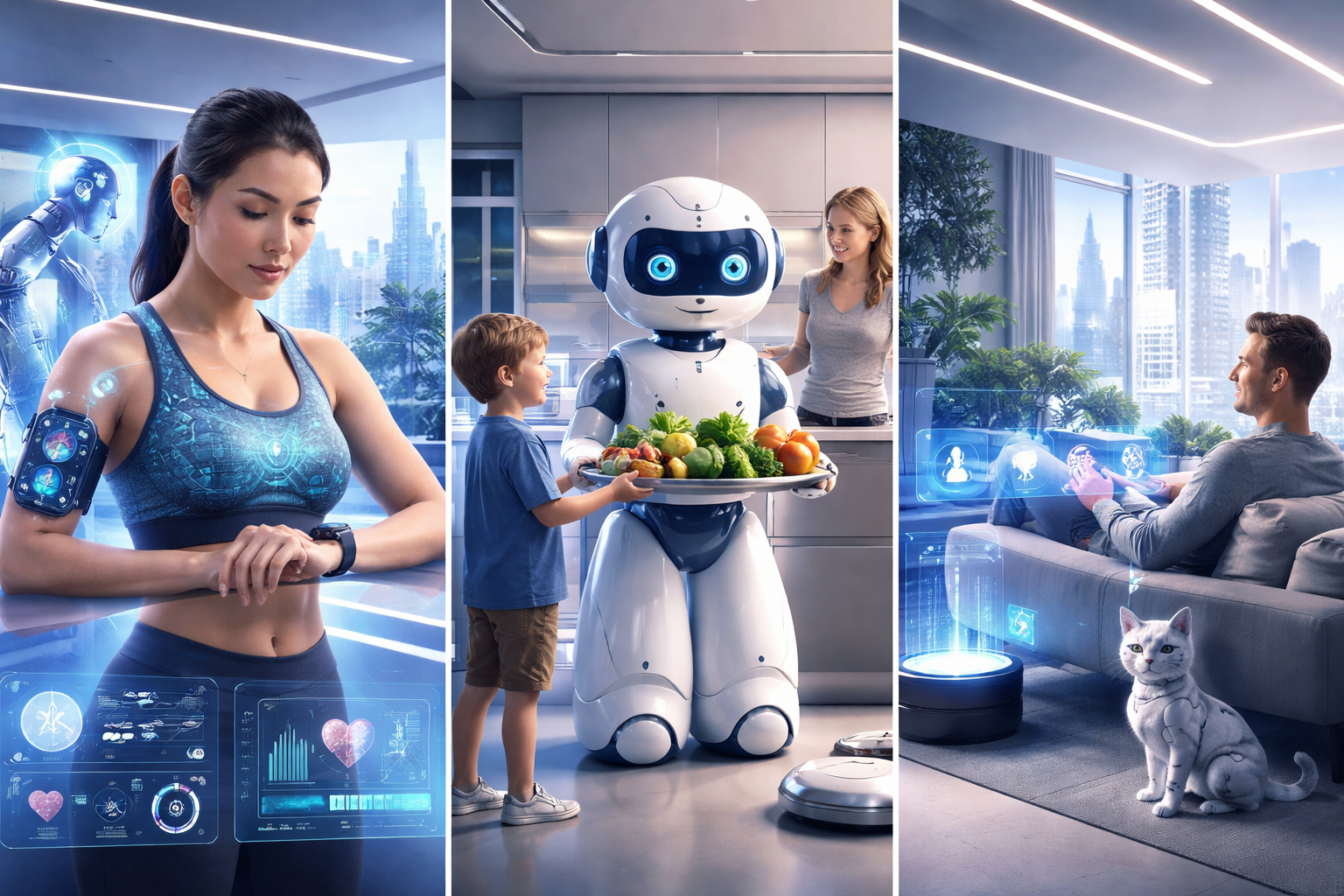
Each January, the Consumer Electronics Show (CES) in Las Vegas serves as one of the world’s most influential technology showcases, where cutting-edge concepts, prototypes, and commercial products converge. In 2026, CES featured a striking array of artificial intelligence (AI) innovations that go far beyond incremental gadget upgrades and instead signal how deeply AI technologies are poised to reshape not only consumer electronics but everyday life — from wellness and diagnostics to labor at home and human-machine collaboration.
A New Era Of AI-Powered Health Monitoring
From Toothbrushes That Sense Health Signals to Cognitive Decline Prediction
One of the most striking trends at CES 2026 was the integration of AI algorithms with unconventional sensors to detect health signals and predict potential disease states in a non-invasive manner. Rather than limiting AI to clinical settings, companies brought diagnostic capabilities into daily routines — embedded in devices we already use.
AI-Infused Oral Hygiene: Detecting More Than Cavities
At first glance, a toothbrush might seem like an unlikely diagnostic tool, but a new AI-powered sonic toothbrush stunned attendees with its promise to use advanced sensors to “smell” molecular signatures associated with over 300 health conditions, including early-stage diabetes and potential liver disorders. The brush analyzes volatile organic compounds in breath during a routine clean and interprets that data through trained machine learning models to flag health anomalies. If validated clinically and approved by regulatory authorities, this approach could move basic screenings out of clinics and into daily habits, potentially increasing early detection of chronic conditions in larger populations.
This innovation reflects a larger shift toward ambient health monitoring, where everyday tools such as toothbrushes, mirrors, or wearables do more than service their primary function — they double as sensing platforms, offering insights into systemic health through patterns that might elude periodic clinical testing. For older adults or people managing chronic diseases, such constant monitoring could be invaluable.
Cognitive Monitoring on Smartphones and Wearables
Echoing this ambient health trend, major tech companies demonstrated AI-enabled approaches to tracking brain health and cognitive decline, a critical issue as global populations age. Companies unveiled enhancements to their “Brain Health Service,” which analyzes a suite of sensor data — from voice patterns and gait captured by wearables to sleep and engagement metrics — to detect subtle deviations associated with early cognitive changes.
This technology is positioned as part of an overarching strategy to integrate AI into preventative care, alerting users and caregivers to potential dementia risk signals before more severe symptoms manifest. Importantly, these developments are framed not as definitive medical diagnostics but as early indicators that can guide individuals toward professional evaluation and lifestyle adjustments. Through connected ecosystems spanning smartphones, watches, and home appliances, AI is positioned to transform from a reactive tool into a proactive health partner.
Household Robotics: From Novelty To Practical Assistance
Robots That Fold Laundry, Make Breakfast, and Manage Daily Chores
Another compelling trend at CES 2026 was the expansion of AI robotics into physical tasks traditionally done by humans — especially within homes. While robotic vacuums and basic home automation have been around for years, the devices shown this year embodied a substantial leap in capabilities, autonomy, and understanding of physical environments.
LG’s CLOiD: Toward a Zero Labor Home
Perhaps the most talked-about product was a humanoid home robot representing a “Zero Labor Home” vision. Through integrated vision-language models and physical AI engines, the robot can perform a range of household tasks that go well beyond floor cleaning. Demonstrations showed it retrieving items from refrigerators, placing food into an oven, starting laundry cycles, and folding and stacking garments after drying.
What sets this robot apart is not just the breadth of tasks but its contextual understanding of domestic environments — interpreting user routines, coordinating with smart appliances, and adapting actions to real-world conditions. These capabilities are enabled by advanced vision processing, spatial mapping, and multi-modal AI that combines language, vision, and action planning. The company’s vision is audacious: if realized at scale, robots like this could handle a significant portion of routine housework, allowing people to redirect their time toward creativity, work, or leisure.
Versatile Home Robots from Startups and Established Brands
Other companies also showcased home robots blending mobility, perception, and task learning. Emerging models demonstrated capabilities such as baby-care assistance, reminders for seniors, object handling, and multi-task performance combining cleaning, fetching, and monitoring tasks, including organizing laundry.
These innovations underscore a broader move in robotics: the industry is shifting away from single-purpose machines toward generalist assistants capable of learning and adapting to diverse home scenarios. This aligns with consumer expectations that household automation should reduce cognitive and physical load rather than require specialized environments or rigid task definitions.
Everyday AI For Personal Care And Grooming
AI-Assisted Tools That Elevate Everyday Tasks
Beyond health diagnostics and robots, CES 2026 highlighted how AI is rapidly permeating ordinary personal care devices — making them smarter, more intuitive, and capable of delivering professional-level results.
Smart Hair Clipper With AI Guidance
A standout example was an AI-powered hair clipper, which blends machine intelligence with personal grooming. Through app control and built-in guidance, the device adjusts blade settings dynamically and offers real-time interactive instructions — essentially acting as a virtual stylist. Users can perform complex haircuts with precision previously reserved for trained professionals, and the AI stylist coach guides people step by step.
This development exemplifies how AI is democratizing skills previously acquired through formal learning. By embedding domain expertise into consumer hardware, these tools help bridge gaps in ability and confidence, transforming routine tasks into experiences enhanced by intelligent feedback.
Smart Homes And Connected Living Powered By AI
A Vision for Integrated AI Across Devices and Services
One of the defining themes at CES 2026 was the ecosystemization of AI — where individual smart devices no longer operate in isolation but form an integrated web of intelligence that supports lifestyle, health, comfort, and convenience.
Companies made clear that AI is no longer just a feature but a foundational layer of their product strategy. Rather than positioning artificial intelligence as an add-on, the vision framed it as the connective tissue linking TVs, appliances, wearables, and services into a seamless experience.
AI Appliances That Understand You
Next-generation AI home appliances, including laundry systems, refrigerators, and robot vacuums, leverage deep learning and sensor arrays to go beyond automation — instead showing the ability to interpret user behavior, optimize performance, and anticipate needs. For instance, a Bespoke AI laundry system can detect fabric type, wash severity, and soil levels, adjusting cycles for optimal cleaning and drying.
Similarly, robot vacuums incorporate AI object recognition to distinguish between obstacles such as cables, pets, and spills and dynamically adapt cleaning strategies accordingly. This shift marks a transition from reactive automation following preset routines to intelligent assistance that learns and evolves with users and environments, foreshadowing a smarter, more context-aware home where AI acts as both caretaker and concierge.
Broader Industry Implications And Challenges
Balancing Innovation With Ethical and Practical Considerations
While the breakthroughs demonstrated at CES 2026 are inspiring, they also highlight the complex challenges that accompany rapid AI deployment. Integrating AI into products that touch personal health, home life, and cognitive wellbeing raises questions about data privacy, algorithmic fairness, clinical validation, and long-term safety.
AI health diagnostics embedded in toothbrushes or wearables may offer early warnings about conditions like diabetes or dementia, but ensuring accuracy, clinical validation, and regulatory compliance is essential before these tools can be widely adopted. Users and healthcare professionals alike will need assurances that the technology complements — not replaces — traditional medical evaluation.
Similarly, in domestic robotics, ensuring that robots can safely interact with varied home environments, respect personal spaces, and protect user privacy will be crucial as these devices become more autonomous and perceptive.
Conclusion
CES 2026 made one thing clear: artificial intelligence is no longer confined to sophisticated labs or cloud-based assistants. It is moving into the mundane and essential corners of daily existence, transforming how we care for ourselves, our homes, and our routines.
From AI-enhanced health detection and cognitive monitoring systems to robots that cook, clean, and assist, the new generation of AI innovations promises to elevate human potential and redefine daily living. Technology companies are increasingly betting that AI’s value lies not in flashy features but in real-world functionality that makes life easier, safer, and richer.