Blockchain
Galaxy Digital Tokenizes Its Stock On Solana Blockchain
Introduction
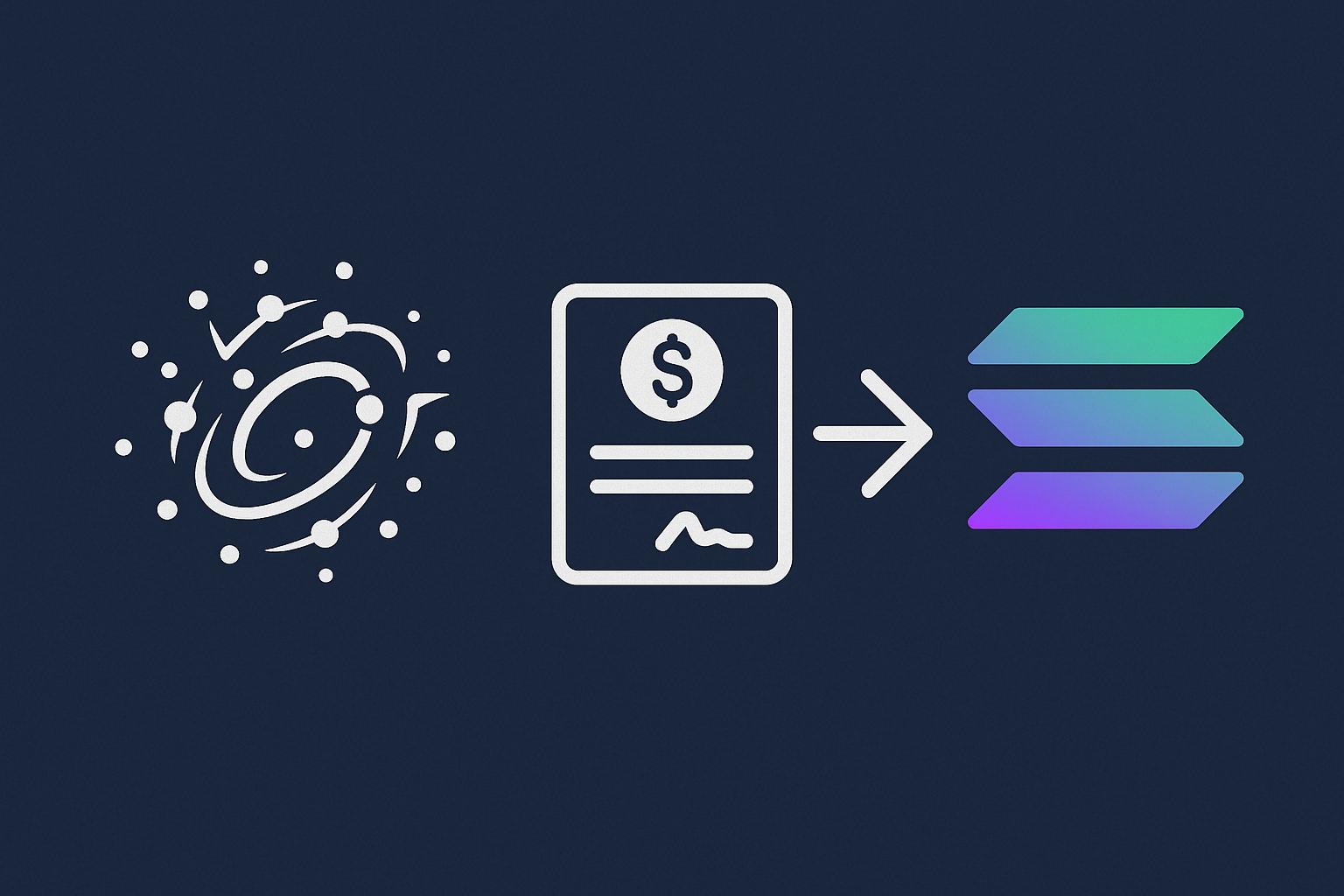
Galaxy Digital, a leader in cryptocurrency finance and blockchain services, has made history by becoming the first Nasdaq-listed U.S. company to tokenize its Class A common stock. This groundbreaking initiative, conducted through a partnership with fintech firm Superstate, allows authorized shareholders to convert their traditional equity holdings into blockchain-based tokens on the Solana network. These tokenized shares maintain all the legal and economic rights of traditional stock, including voting rights and dividend entitlements, while introducing the advantages of blockchain transparency, speed, and 24-hour trading possibilities.
This marks a pivotal moment in the ongoing convergence between traditional finance and decentralized finance, often referred to as TradFi and DeFi, and sets the stage for a future in which tokenized securities could become mainstream.
A Landmark In Equity Tokenization
Until now, most experiments with tokenized equities involved synthetic products or derivative instruments issued by third parties. Galaxy Digital has taken a different approach by ensuring that each tokenized GLXY share represents a real, SEC-registered Class A common share. This direct link between traditional and on-chain equity means investors enjoy the same rights and protections as they would with shares held through a brokerage.
The tokenization process is not simply a technical exercise; it is also a legal milestone. Galaxy and Superstate have worked closely with regulatory frameworks to ensure that tokenized shares integrate with the existing shareholder registry. This ensures compliance with securities laws while demonstrating that blockchain can be used responsibly to enhance financial market infrastructure.
How Does Tokenization Work?
Superstate’s Opening Bell platform powers this initiative. Shareholders first onboard with Superstate by completing identity verification, or KYC. Once verified, they are added to an allowlist of eligible wallet addresses. This allows them to interact with the token contract on the Solana blockchain.
The process begins when a shareholder requests that their brokerage transfer shares into a Direct Registration System account with Galaxy’s primary transfer agent. Those shares are then moved to Superstate’s account designated for tokenization. From there, the shareholder can mint the equivalent number of tokenized GLXY shares directly to their Solana wallet.
The reverse process is equally straightforward. A shareholder who holds tokenized shares can request redemption, at which point Superstate burns the tokens and transfers the corresponding shares back into the traditional system. This seamless back-and-forth movement ensures that tokenization remains flexible and secure.
Benefits Of Tokenized Shares
The advantages of tokenization are numerous. The most immediate benefit is speed. Traditional equity trades often take two days to settle, while tokenized shares can be transferred instantly. This reduces counterparty risk and increases liquidity.
Transparency is another major advantage. Blockchain provides an immutable record of all transactions, offering regulators, auditors, and shareholders real-time visibility into ownership structures.
Perhaps most exciting is the potential for global 24-hour trading. Traditional equity markets are constrained by time zones and business hours. By contrast, tokenized shares can be exchanged around the clock, enabling greater participation from international investors and potentially increasing market efficiency.
For institutional investors, tokenized shares also unlock the ability to programmatically manage portfolios using smart contracts. This could lead to automated compliance checks, real-time risk management, and streamlined reporting.
Regulatory And Compliance Considerations
Galaxy Digital’s approach is significant because it prioritizes compliance. Unlike some experimental tokens that bypass regulations, Galaxy and Superstate worked to ensure that tokenized shares remain legally equivalent to traditional shares. This includes maintaining accurate shareholder records, enforcing transfer restrictions, and aligning with SEC requirements.
To maintain security and compliance, tokenized GLXY shares can only be transferred between approved wallet addresses. Any attempt to move tokens to an unverified address will fail at the contract level. This prevents unauthorized trading and ensures the system remains within legal boundaries.
However, one limitation is that tokenized shares cannot yet be freely traded on decentralized exchanges or automated market makers. Regulatory uncertainty around peer-to-peer securities trading prevents full integration with DeFi platforms. Until regulators clarify the rules, tokenized shares will remain confined to controlled environments.
Early Adoption And Market Reception
Early indications suggest growing interest among institutional investors. Thousands of shares have already been converted into tokenized form, demonstrating that market participants see value in the added flexibility.
The initiative also sends a strong signal to the broader financial industry. By becoming the first U.S. public company to tokenize its stock, Galaxy Digital has positioned itself as a trailblazer in capital markets innovation. Other companies are likely to observe closely and may eventually adopt similar strategies once regulatory pathways become clearer.
Galaxy’s Strategic Position
This move fits neatly into Galaxy Digital’s broader trajectory. The firm, founded by Michael Novogratz, has long sought to bridge the gap between crypto markets and traditional finance. Listing on Nasdaq earlier in 2025 was already a major milestone, and the tokenization of shares further reinforces Galaxy’s reputation as an innovator.
At the same time, Galaxy has had to navigate challenges, including regulatory scrutiny and market volatility. Its willingness to experiment with tokenization reflects a commitment to shaping the next generation of financial infrastructure, even as the company continues to resolve legacy issues.
Broader Implications For Capital Markets
The significance of Galaxy’s initiative extends far beyond its own shareholders. Tokenization of securities has long been touted as a key application of blockchain technology. It promises to unlock trillions of dollars in assets by making them more liquid, accessible, and programmable.
If successful, Galaxy’s experiment could accelerate adoption across industries. Public companies, private equity firms, and even governments could explore tokenizing stocks, bonds, real estate, and other assets. The benefits of faster settlement, transparency, and global accessibility are too compelling to ignore.
Moreover, tokenization could reshape how exchanges, custodians, and brokers operate. By embedding more of the financial system directly onto blockchains, intermediaries may be forced to adapt their roles, potentially leading to lower costs and greater efficiency for investors.
Challenges And Limitations
Despite the promise, significant hurdles remain. Regulatory frameworks around securities tokenization are still evolving. Without clear guidance, companies must tread carefully to avoid potential violations.
Technology also presents challenges. While Solana provides the speed and scalability required for tokenization, questions about long-term network stability and interoperability remain. Ensuring that tokenized shares can eventually interact with other blockchain ecosystems will be critical for widespread adoption.
Market adoption is another unknown. While early institutional uptake is promising, retail investors may be slower to embrace tokenized shares, especially if access remains limited to specialized platforms. Achieving broad acceptance will require user-friendly interfaces and robust investor protections.
The Road Ahead
Galaxy and Superstate have ambitious visions for the future. They aim to eventually integrate tokenized shares with decentralized finance protocols, enabling trading on automated market makers and creating new liquidity pools. Achieving this will require regulatory approval, but the potential is enormous.
In the long term, tokenized equities could become a standard feature of capital markets. Imagine a world where every publicly traded stock exists on a blockchain, enabling instant settlement, programmable dividends, and global accessibility. Galaxy’s pioneering step brings that vision closer to reality.
Final Thoughts
Galaxy Digital’s tokenization of its Class A common stock represents a historic milestone in the fusion of blockchain technology with traditional finance. By ensuring that tokenized shares retain full shareholder rights and regulatory compliance, the company has set a new benchmark for how securities can evolve in the digital age.
This initiative not only enhances efficiency and transparency but also signals a broader shift in how capital markets might operate in the future. Challenges remain, particularly in regulatory clarity and technology integration, but Galaxy has demonstrated that tokenization is not just a concept—it is a practical, functioning reality. As more companies and regulators take notice, Galaxy Digital’s bold step may well be remembered as the beginning of a new era in global finance.