Cryptocurrency
Ethereum Gas Fees Drop To Six-Month Low As DeFi Interest Surges
Introduction
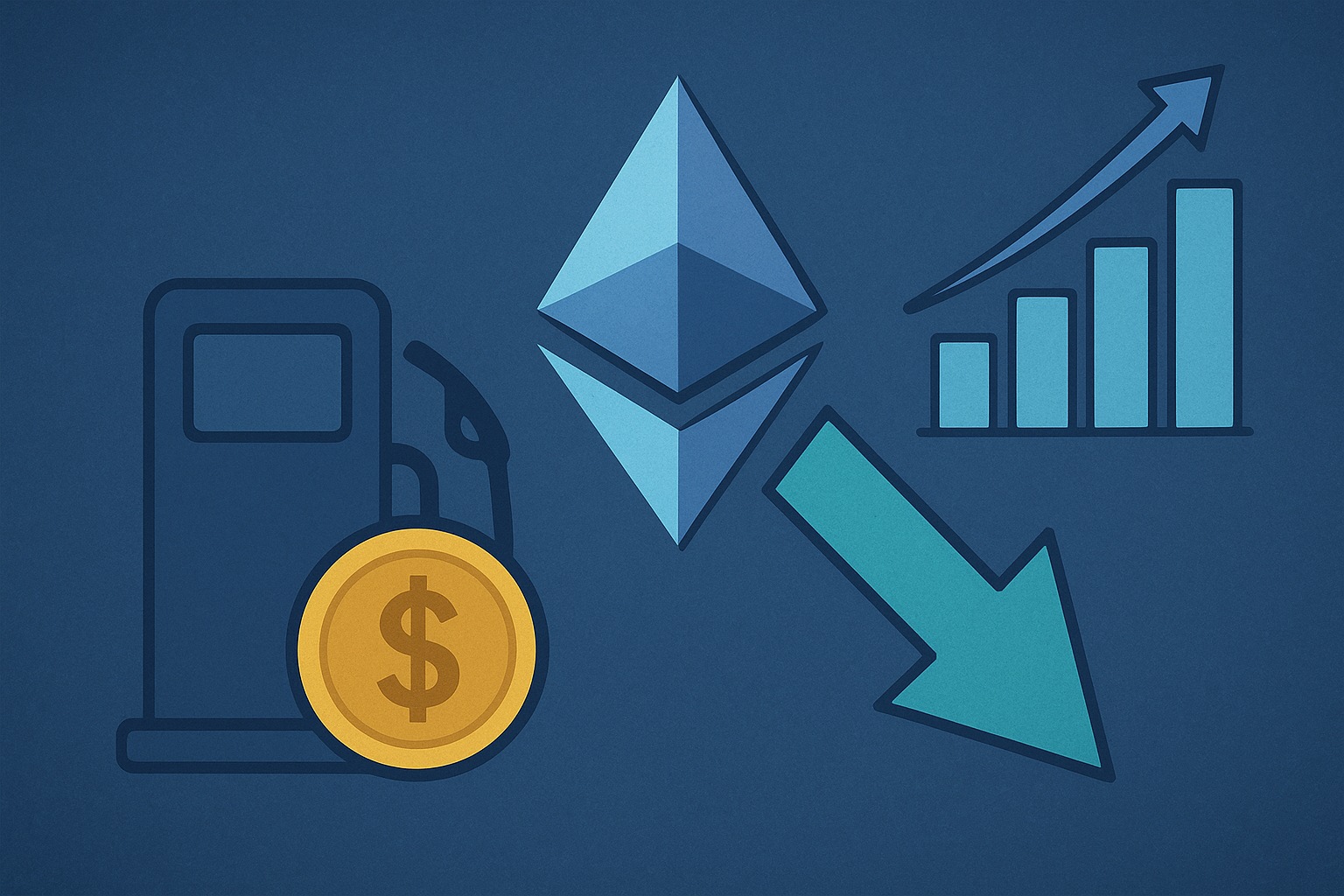
Ethereum, the world’s second-largest blockchain by market capitalization, has experienced a significant drop in gas fees, hitting their lowest point in six months. This decline is a welcome change for both developers and users, particularly in the decentralized finance (DeFi) sector, where transaction costs often play a decisive role in adoption and usability. Over the past week, data from blockchain analytics platforms has shown a consistent downward trend in average transaction costs, largely attributed to reduced on-chain activity and improved network efficiency. For the first time in half a year, Ethereum transactions have become far more affordable, offering a fresh window of opportunity for innovators and investors across the crypto space.
Understanding Ethereum Gas Fees
Ethereum gas fees are the payments users make to process transactions or execute smart contracts on the Ethereum blockchain. These fees are denominated in “gwei,” a fraction of Ether (ETH), and fluctuate based on demand for network resources. High demand leads to congestion, pushing fees up as users bid more to prioritize their transactions. Conversely, when network demand falls, fees naturally decline.
Over the past year, Ethereum gas fees have been notoriously volatile, with periods of intense network congestion—often during NFT minting events or token launches—sending fees to sky-high levels. This has occasionally priced out smaller investors and limited the adoption of Ethereum-based applications. The latest drop, however, represents a notable relief for the ecosystem, especially for DeFi users who frequently engage in multiple transactions such as token swaps, liquidity provision, and yield farming.
Why Have Gas Fees Dropped?
The current decline in gas fees is driven by several overlapping factors.
1. Reduced Network Activity
One of the primary causes is a dip in on-chain activity. While the crypto market has seen periods of high volatility this year, the past few weeks have been relatively calm, with fewer large-scale NFT drops, meme coin frenzies, and token launches. As a result, demand for Ethereum block space has eased.
2. Layer-2 Adoption
The growing adoption of Ethereum Layer-2 scaling solutions such as Arbitrum, Optimism, and zkSync has also contributed to lower mainnet congestion. These solutions process transactions off-chain or in batches before settling them on Ethereum, significantly reducing the load on the base layer.
3. Protocol Upgrades and Efficiency Gains
Ethereum’s transition to proof-of-stake (The Merge) and the subsequent Shanghai upgrade have improved the network’s overall efficiency. These upgrades have paved the way for lower base fees under EIP-1559’s fee adjustment mechanism, particularly when demand is moderate.
Impact On DeFi Projects
DeFi, or decentralized finance, is among the biggest beneficiaries of reduced gas fees. In DeFi ecosystems, users frequently move assets between protocols, perform token swaps, and stake tokens in liquidity pools. High gas fees can make these activities unprofitable for smaller portfolios, discouraging participation.
With transaction costs now at their lowest in six months, smaller traders and new investors can more feasibly interact with DeFi protocols without seeing a significant portion of their capital eaten by fees. Developers, too, gain an advantage as they can deploy and test smart contracts at a fraction of the previous cost, fostering innovation and experimentation.
For established DeFi protocols like Uniswap, Aave, and Curve, lower gas fees could translate to a surge in activity. Protocols may see an increase in trading volume, liquidity provision, and user onboarding as the barrier to entry falls. The result could be a short-term boost in total value locked (TVL) across the Ethereum DeFi landscape.
Renewed Developer Activity
High gas fees have historically been a deterrent for developers launching new projects on Ethereum, especially when cheaper alternatives such as Binance Smart Chain or Polygon are available. However, with fees dropping, Ethereum regains a competitive edge in attracting development talent.
Lower deployment costs make it financially viable for early-stage projects to launch without committing large amounts of capital to initial smart contract interactions. This can encourage innovation in DeFi, gaming, NFTs, and other blockchain use cases that rely on Ethereum’s security and developer ecosystem.
Investor Sentiment And Market Implications
From an investor perspective, lower transaction fees can be interpreted in two ways. On one hand, they reflect reduced demand for block space, which could be linked to a slowdown in market activity. On the other hand, they create conditions conducive to user growth, developer activity, and broader adoption.
Market analysts suggest that if the lower fee environment persists while macroeconomic conditions stabilize, it could spark a new wave of Ethereum-based application growth. In turn, this might support Ethereum’s long-term valuation, as utility plays a key role in sustaining demand for ETH.
The Role Of Layer-2 In Ethereum’s Future
Layer-2 solutions have been instrumental in easing mainnet congestion and reducing fees for everyday users. Networks like Arbitrum and Optimism are already processing millions of transactions at a fraction of the cost of Ethereum mainnet.
The synergy between Ethereum’s base layer and its Layer-2 scaling solutions is critical to the blockchain’s future. If more users and applications migrate to these solutions, Ethereum mainnet will primarily serve high-value transactions and settlement purposes, keeping base layer fees more stable in the long run. This hybrid model could significantly enhance Ethereum’s scalability without sacrificing decentralization or security.
Risks And Challenges Ahead
While lower fees are generally positive, there are potential challenges to consider. Sustained low fees may indicate that fewer users are interacting with Ethereum, which could be a sign of cooling interest. Additionally, competition from alternative blockchains remains fierce, with Solana, Avalanche, and other networks offering low-cost transactions and strong ecosystems.
Furthermore, global regulatory developments could influence user activity. Any major policy shifts—such as stricter KYC/AML requirements or limitations on DeFi protocols—might affect Ethereum usage regardless of transaction costs.
The DeFi Resurgence: What To Expect?
If the current fee environment persists, DeFi could experience a mini-resurgence in the coming months. Lower fees might encourage yield farmers to redeploy capital, traders to increase position sizes, and developers to launch new dApps. We could see a revival of DeFi Summer-like activity, albeit on a more mature and regulated playing field.
Newcomers to crypto often start with simple activities like swapping tokens or providing liquidity. Affordable fees make these entry points more attractive, potentially leading to higher user retention rates. If Layer-2 integrations remain smooth and transaction costs stay low, Ethereum could reclaim market share from rival blockchains.
Conclusion
Ethereum’s six-month low in gas fees is more than just a statistical milestone—it represents a strategic opportunity for the blockchain ecosystem. DeFi protocols, developers, and users all stand to benefit from the more accessible cost structure, which can drive innovation and adoption in the months ahead.
However, sustaining this momentum will require Ethereum to balance scalability, decentralization, and security while navigating competitive and regulatory pressures. As the network continues to evolve, the interplay between mainnet improvements, Layer-2 adoption, and market conditions will determine whether this period of low fees becomes a turning point in Ethereum’s growth story.